Heart Health Gummy Vitamins vs Capsules: Which Delivers More?
Quick Answer: Are Gummies or Capsules Better for Heart Health?
Capsules deliver more active ingredient per serving, and for heart formulas that gap is decisive. A gummy is mostly gelling agent, sweetener and flavour, which leaves very little room for the bulky botanical extracts, plant sterols, omega-3 oils and CoQ10 that heart research is built on. Heart health gummy vitamins make sense for small-dose nutrients such as vitamin D or K2, or for anyone who genuinely cannot swallow a capsule — but a gummy you actually take beats a capsule sitting unopened in a drawer.
- Dose: capsules win, often by an order of magnitude for botanical extracts.
- Adherence: gummies win, and consistency is worth real ground.
- Hidden cost: added sugar daily, plus faster potency drift in storage.
What a gummy actually is, chemically
Strip a gummy vitamin down and you find four things doing the structural work. A gelling agent — usually pectin for vegan products or gelatin for the rest — forms the chewy matrix. A bulk sweetener, typically glucose syrup and sucrose, gives body and preserves texture. An acidulant such as citric acid provides tartness and helps the gel set. Then flavours, colours and a light oil or wax coating stop the pieces sticking together in the jar.
Whatever is left over is where your actual supplement lives, and it is not much. A gummy weighs a few grams, most of that is sugar and gel, and the active load has to dissolve or disperse in that matrix without wrecking the texture or the taste. This is a genuine formulation constraint, not a shortcut taken by lazy manufacturers.
A capsule has the opposite geometry. The shell is a thin container and effectively all of the internal volume is available for actives, which is why a single capsule can carry several hundred milligrams of a plant extract without difficulty. The trade-off is that you have to swallow it, and it has no taste to recommend it.
The dose ceiling: why gummies carry less
Heart supplement ingredients are, as a group, awkward. Beetroot powder is dosed in grams. Plant sterols are dosed in grams. Marine omega-3 needs a gram or more of oil for a meaningful EPA and DHA load. CoQ10 needs a fat carrier and turns up in oil-based softgels for exactly that reason. Standardised botanical extracts such as cinnamon, mulberry leaf or banaba typically sit in the hundreds of milligrams per serving.
None of those fit comfortably into a few grams of pectin gel. You can put a token amount in — enough to name the ingredient on the front panel — but not enough to reproduce what the research used. That is the crux of the format argument. Where gummies are competitive is with nutrients that work at microgram or low-milligram levels: vitamin D, vitamin K2, B12, folate, iodine. Those genuinely fit, and a well-made gummy can deliver them just as effectively as a capsule.
Oily ingredients present a second problem. Fish oil in a chewy sweet has an obvious taste issue and oxidises more readily when exposed in a soft matrix, which is why omega-3 gummies tend to carry small amounts and lean heavily on flavour masking. If your reason for buying is omega-3, the format question answers itself.
Format comparison at a glance
| Factor | Gummy | Capsule / softgel | Which wins |
|---|---|---|---|
| Active ingredient per serving | Low — matrix takes most of the volume | High — several hundred mg is routine | Capsule, decisively |
| Suits botanical extracts | Token amounts only | Yes, at studied amounts | Capsule |
| Suits oils (omega-3, CoQ10) | Poorly — taste and oxidation | Yes — softgels are built for it | Capsule |
| Suits small nutrients (D, K2, B12) | Yes, comfortably | Yes | Tie |
| Added sugar per daily serving | A few grams, every day | None | Capsule |
| Stability in storage | Sensitive to heat and humidity | More stable in a sealed shell | Capsule |
| Ease of taking daily | High — no swallowing required | Lower for some people | Gummy |
| Cost per active milligram | Higher | Lower | Capsule |
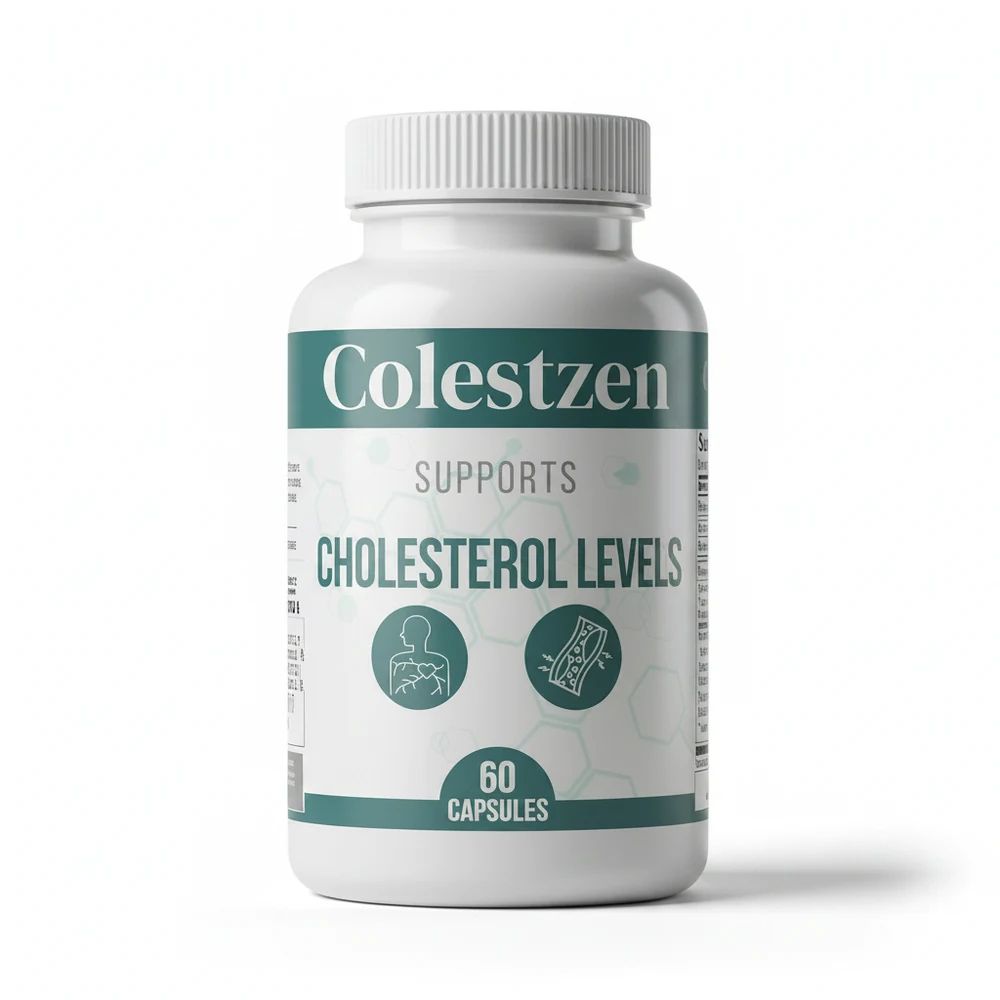
Want to see what a full-dose capsule formula looks like?
If you are weighing up the best all in one heart health supplement, compare the per-serving amounts rather than the packaging — the ColestZen label prints all nine botanicals with their quantities.
See the Official ColestZen OfferHeart health gummy vitamins and the sugar problem
This is the part that matters most in a cardiovascular context, and it is the part most product pages skip past. A gummy needs sweetness for the same reason it needs pectin: without it the product is inedible. A two-gummy daily serving typically contributes a few grams of added sugar, which is not catastrophic on its own but is a daily, permanent addition to your intake — and added sugar is precisely the thing most heart-focused dietary advice asks you to reduce.
Sugar-free versions solve one problem and introduce another. They lean on sugar alcohols such as maltitol, sorbitol or xylitol, which are poorly absorbed and can cause bloating, wind and loose stools at the doses used in a few gummies a day. Some people tolerate them perfectly; others find out the hard way. Neither outcome is a health disaster, but both deserve mention before you buy a three-month supply.

There is a behavioural angle too. Because gummies taste like confectionery, people take extra without thinking about it — the same instinct that makes it hard to eat one square of chocolate. With a fat-soluble vitamin, casual over-taking is not trivial, and with a child in the house it is a genuine safety issue. Gummy supplements are a recurring reason for calls to poison control centres, and storing them out of sight rather than on the kitchen counter is a sensible habit.
Stability, potency drift and label accuracy
A capsule protects its contents inside a sealed shell in a sealed bottle. A gummy exposes its actives to a wet, acidic, sugar-rich matrix that sits in whatever heat and humidity your kitchen provides. Vitamins degrade faster under those conditions, and manufacturers compensate by adding an overage at production so the product still meets its label at the end of shelf life.
The practical consequence is variability. Independent testing programmes have repeatedly reported gummy products drifting from their stated amounts, sometimes under and sometimes over, and this is a well-recognised challenge in the category rather than a scandal about any one brand. It is also the strongest argument for buying gummies only from manufacturers who publish third-party test results, and for storing them somewhere cool and dark rather than above the stove.
The format that gets taken every day beats the format that theoretically delivers more. But the format that gets taken every day and delivers almost nothing is just an expensive sweet with a health claim on the jar.
The honest case for gummies
Most heart health gummy vitamins are bought for convenience rather than potency, and there is nothing wrong with that as long as the trade is understood rather than hidden. Adherence is a real clinical variable, not a marketing excuse. A meaningful number of adults dislike or struggle to swallow capsules, and older adults, people with dysphagia and anyone managing a large medication load are disproportionately affected. For those people, a supplement that is pleasant to take is one they will actually take, and a modest dose taken daily comfortably beats a full dose abandoned after a fortnight.
Gummies also make sense when the target nutrient is small. Vitamin D, K2 and B12 all fit the format without compromise, and a gummy carrying a proper amount of those is not a lesser product. Some people find the routine easier to keep because it is attached to something enjoyable, which is a legitimate reason to choose one.
Where it goes wrong is when a gummy borrows the vocabulary of the capsule category. Anyone browsing the best heart health vitamins for women, or looking for a broad daily formula, should compare the actual per-serving numbers rather than the ingredient names on the front label. A gummy listing nine botanicals is almost certainly listing them at amounts no study ever used.
What neither format can do
Neither a gummy nor a capsule treats, cures or prevents any disease, and neither should be described that way. Neither lowers cholesterol the way a prescribed medicine does. Neither substitutes for the things that genuinely change cardiovascular risk over a lifetime: what you eat most days, how much you move, whether you smoke, your weight, your sleep, and any medication your doctor has prescribed.
Format also cannot rescue a weak ingredient. Putting a botanical with thin evidence into a superior delivery system produces a well-delivered dose of something that may not do much. It is worth getting the ingredient question right first — our look at cinnamon, plant botanicals and cholesterol goes through what the human trial data does and does not support — and treating the gummy-versus-capsule decision as the second question, not the first.
How to choose between them
Start with the ingredient. If what you want is vitamin D, K2 or B12, buy whichever format you will use, and buy it from a company that publishes third-party testing. If what you want is a botanical blend, plant sterols, omega-3 or CoQ10, a capsule or softgel is the only format that can carry a serious amount, and the gummy versions of those products are usually decorative.
Then check three numbers on the back panel: the amount of each active per serving, the added sugar per serving, and the serving size itself. Products often quote impressive-looking amounts across a four-gummy serving, which quadruples both the sugar and the price per day. Compare on cost per active milligram rather than cost per bottle, and the picture usually clarifies fast.
Finally, be honest about your own behaviour. If you know you will not swallow a capsule every morning, the theoretically better product is the wrong one for you. If swallowing is not an issue, there is no strong argument for choosing a format that carries less, costs more per milligram and adds sugar to your day. Anyone comparing the best daily supplement for heart health can see how a full-strength capsule formula is laid out in the ColestZen ingredient breakdown, where every botanical is listed with its amount rather than its adjective.
Medical note: this article is general information, not medical advice. Speak to a healthcare professional before starting any supplement, especially if you are pregnant, nursing, taking medication, managing diabetes or blood sugar, or managing high cholesterol or blood pressure — and keep all supplements out of the reach of children.
Frequently asked questions
Do gummy vitamins work as well as capsules?
For small nutrients such as vitamin D, B12 or vitamin K2 a well-made gummy can deliver the same amount as a capsule. For anything bulky or oily, including most botanical extracts, plant sterols, fish oil and CoQ10, the gummy format simply cannot carry a research-scale dose. The format is not weaker in principle, it is smaller in capacity.
How much sugar is in a heart health gummy?
Most gummies are built on a sugar or glucose syrup base, and a typical two-gummy serving contributes a few grams of added sugar every day. Sugar-free versions swap in sugar alcohols such as maltitol or sorbitol, which avoid the sugar but can cause bloating and loose stools in people who are sensitive to them.
Are gummy vitamins less accurate on potency?
They are harder to keep accurate. Heat, light and humidity degrade actives inside a chewy matrix faster than inside a sealed capsule, so manufacturers add overages at production to compensate. Independent testing programmes have repeatedly found gummy products drifting from their stated amounts, which makes third-party testing more valuable in this format, not less.
Should heart supplement gummies be kept away from children?
Yes. Gummies look and taste like confectionery, which makes accidental overconsumption by children a genuine risk, and it is a common reason for calls to poison control centres. Store them out of reach and out of sight, in a closed container, exactly as you would any other medicine or supplement.
Scientific references
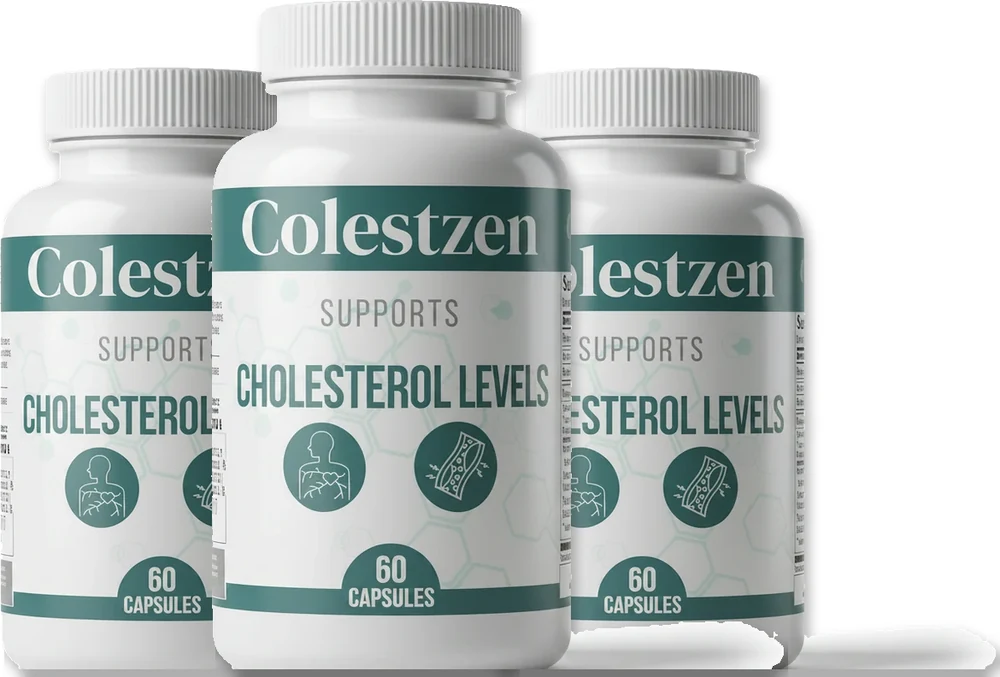
See the capsule formula behind ColestZen
Nine plant botanicals in one daily capsule, every amount printed on the label, with no sugar and nothing hidden inside a proprietary blend.
Check Availability & Offer