ColestZen Ingredient List and Label: What It Tells You
Quick Answer
The ColestZen label lists 18 ingredients, made up of 9 botanicals and 9 micronutrients. This guide explains what a proprietary blend is, why per-ingredient amounts matter, and how to read the ColestZen ingredient list in plain words. The sales page also cites scientific references, and some of those cover ingredients that are not in the 18-ingredient list, so read them as background research.
- No panel found: no legible Supplement Facts image exists in any source we reviewed for this product.
- Unresolved conflict: the sales page calls it a proprietary blend; a separate reviewer source says there is no such label.
- Reference mismatch: the page's cited studies are largely of ingredients absent from ColestZen's own formula.
Every ingredient-focused article on this site so far has looked at ColestZen's botanicals and micronutrients one at a time, asking what the research says about each. This one asks a different, more structural question: what does ColestZen's own label actually tell you, as a document, about the product you'd be buying? That question turns out to have a genuinely interesting and slightly unusual answer for this specific product, involving a labeling term that may or may not even apply, and a set of cited "scientific references" that mostly do not match the ingredients they are supposedly backing up.
What a proprietary blend actually is
Under U.S. supplement labeling rules, a company has two basic ways to disclose ingredients in a formula. It can list each ingredient with its own individual amount — "Cinnamon Bark 500mg," "Bitter Melon Extract 300mg," and so on, each on its own line. Or it can group several ingredients together under a single name, commonly labeled something like "Proprietary Blend" or "Proprietary Formula," disclose the combined total weight of everything in that group, and not break out how much of that total belongs to any one ingredient. Both approaches are legal. The second one is simply less informative to the person reading the bottle.
The usual justification companies give for a proprietary blend is protecting a formulation from being copied by competitors. That is a real, legitimate business consideration, and using a blend is not by itself evidence of anything shady. But it comes with a real cost to the buyer: when nine botanicals are grouped into one undisclosed total, there is no way to know whether the ingredient most people are buying the product for — say, the one with the strongest research behind it — makes up a meaningful share of that total, or a negligible trace included mostly so it can appear on the label. A "1500mg proprietary blend" of nine botanicals could, mathematically, be nearly all one ingredient and barely any of the other eight, or a roughly even split, or anything in between, and the label alone cannot tell you which.
This is why per-ingredient amounts matter so much more than ingredient names. A name confirms an ingredient is present in some quantity greater than zero. An amount tells you whether that quantity is in the range where research has actually found an effect. We walked through exactly this gap for four specific botanicals in our companion piece on ColestZen's blood sugar botanicals, where real published research exists for bitter melon, gymnema, banaba and mulberry, but ColestZen's own amount for each is not stated.
What we could actually find for ColestZen, specifically
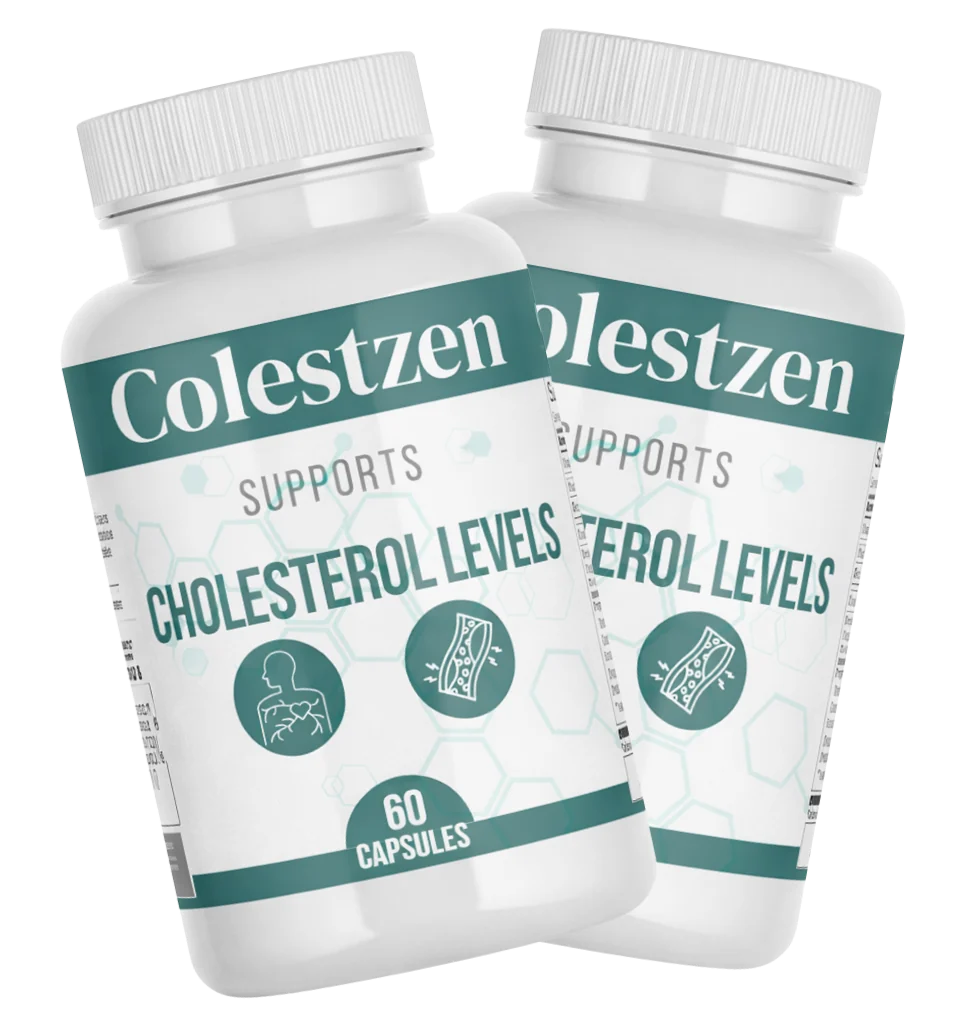
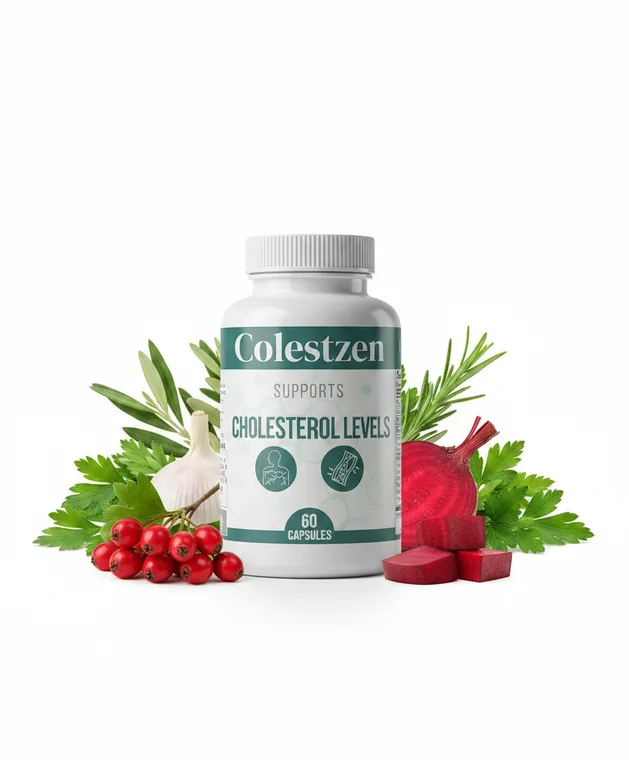
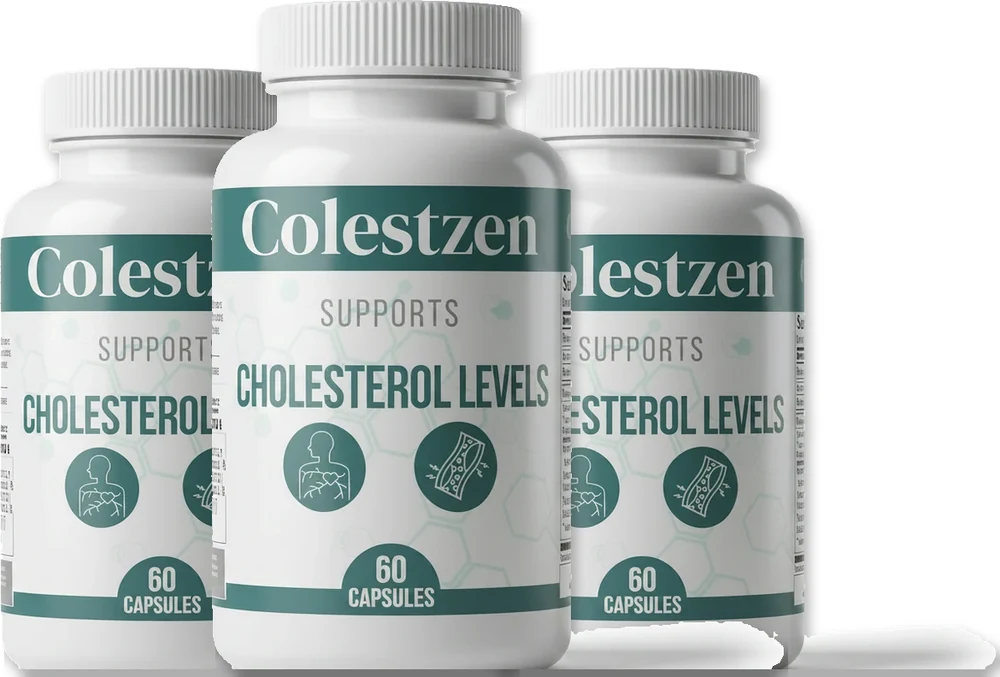
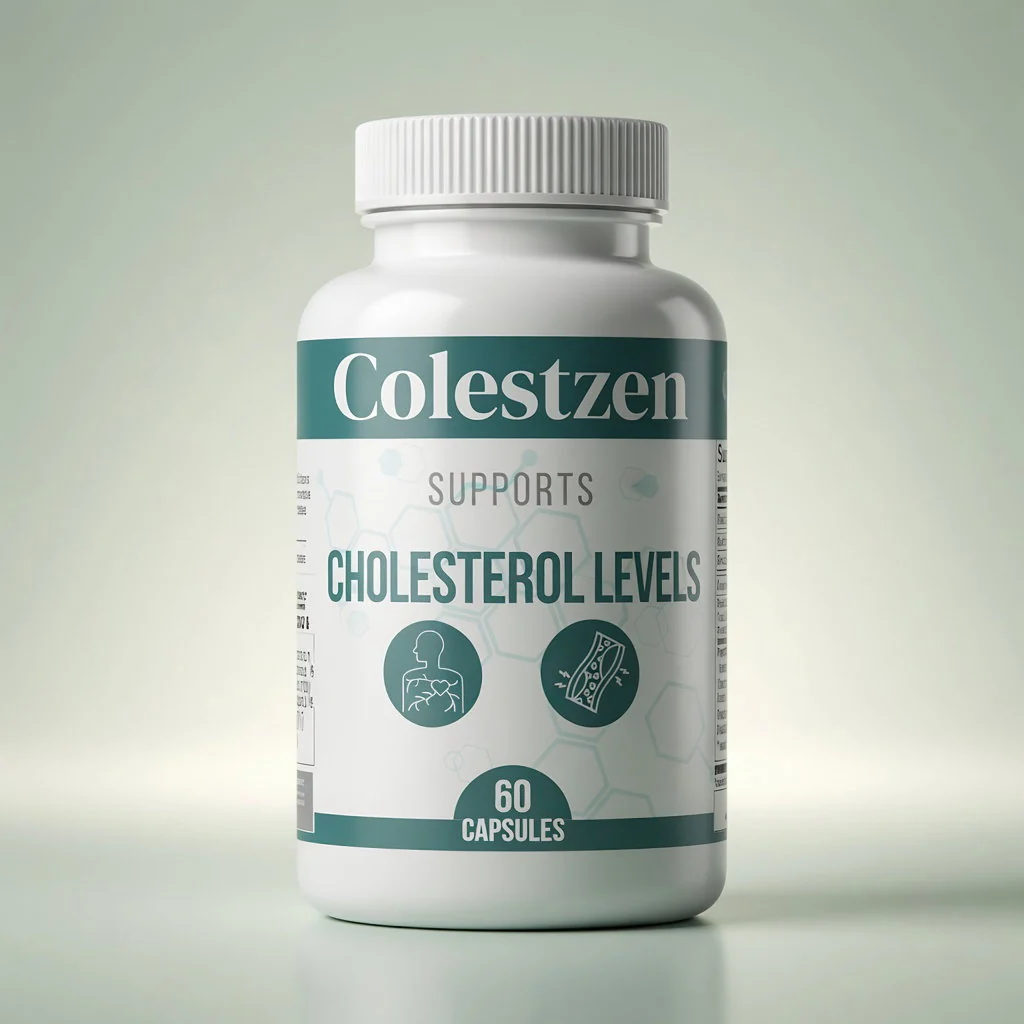
With that background, here is the specific, product-level finding for ColestZen, stated as plainly as the sources allow. Across every source checked — the current sales page, its terms and returns pages, the generic BuyGoods checkout page, press-release-style coverage on outlets such as GlobeNewswire and Manila Times, and independent-review pages — no legible image of a Supplement Facts panel exists. The bottle mock-ups used on the sales page show a clear front label (product name, "SUPPORTS CHOLESTEROL LEVELS," "60 CAPSULES"), but the side panel, where a Supplement Facts box would normally be printed, is not legible in any image we were able to review. Every amount, unit and percentage claim below the ingredient names comes from page text, not from a photographed panel, and the page text itself gives none of those numbers — it names all 18 ingredients and states nothing further about quantity for any of them.
The unresolved conflict: is it a proprietary blend or isn't it?
Here is where the story gets genuinely strange, and worth naming honestly rather than smoothing over. ColestZen's own sales page uses proprietary-blend language directly, referring to "The proprietary blend" and describing the product as "an optimally dosed, proprietary formula." That is the seller's own chosen description of its formula.
A separate, independent reviewer source we checked states the opposite: that ColestZen does not actually have a proprietary-blend label, and that per-ingredient amounts simply are not disclosed on the label or in any publicly available product documentation at all — which is a different claim than "there's a proprietary blend total but no per-ingredient breakdown." A page for what may or may not be a related site makes a similar claim, stating that exact per-ingredient amounts are not published on the current product label.
Those two things cannot both be precisely true in the way each source states them: either there is a proprietary blend with an undisclosed total (the sales page's framing), or there is no such blend structure on the label at all (the reviewer's framing) — and without a legible panel image, we cannot adjudicate between them. We are stating this as an open, unresolved conflict rather than picking a side, because picking a side without a source that actually settles it would mean guessing, and the fact pack behind this article explicitly instructs against presenting any dose or proprietary-blend fact as label-confirmed. What both sources do agree on, which is the more important practical point for a shopper, is that no per-ingredient amount is available from any source either way.
Check the current label claims for yourself
Formula descriptions on sales pages can change. See the current ColestZen page directly before deciding.
View the Official ColestZen PageThe reference mismatch: cited studies of ingredients that aren't in the formula
The second finding worth walking through carefully is the "Scientific References" section that appears on ColestZen's sales page. A references section is normally there to reassure a reader that the formula's claims rest on cited research. Read closely, though, the studies cited on ColestZen's page are largely about ingredients that are not part of ColestZen's own stated 18-ingredient list at all: Terminalia arjuna, amla (Emblica officinalis), camu-camu, Pycnogenol (a patented pine bark extract), Centella asiatica, sea buckthorn, Schisandra, Rhodiola, astaxanthin and epicatechin all appear among the cited references, and none of those plants or compounds appears anywhere in the "9 botanicals and 9 micronutrients" that ColestZen's own formula section lists.
To be direct about why that matters: a references section is only meaningful evidence for a product if the studies it cites are actually studies of the ingredients in that product, at comparable doses. A study of Pycnogenol's effect on circulation tells a reader nothing about whether ColestZen's licorice root or juniper berry does anything, because ColestZen does not contain Pycnogenol. None of the cited references is a study of the finished ColestZen product either — that would be true even if the cited ingredients matched, since blended proprietary formulas are almost never trialled as a whole product, but it is a separate and additional problem when the references don't even match the ingredient list they are supposedly supporting.
We are not speculating about why this mismatch exists — it could be a templating error carried over from a different product's sales page, a generic "supplement science" reference block reused across a product line, or something else entirely, and we have no way to confirm which. What we can say directly is what a shopper can verify for themselves: read the reference list next to the ingredient list, and check whether the two actually correspond. On ColestZen's page, as reviewed, they largely do not.
How to read a proprietary-blend label without getting fooled
None of this means blended, proprietary-style supplements are inherently untrustworthy as a category, and it would be unfair to treat this one product's specific gaps as true of every blend on the market. It does mean a shopper needs a slightly different reading strategy for this kind of label than for a fully disclosed one. A few concrete habits help:
Separate the ingredient list from the amount question. A recognizable, correctly named ingredient tells you it is legally present. It does not tell you how much. Treat these as two separate facts, confirmed independently.
Check whether cited references actually name the product's own ingredients. A references section that cites unrelated compounds is not evidence for the formula it sits next to, no matter how credible the individual studies are on their own terms.
Look for a total blend weight, even without a per-ingredient breakdown. A total weight at least bounds what's possible; total silence, which is what we found here, does not.
Treat "proprietary blend" and "no panel found" as different problems. A disclosed blend total with hidden individual amounts is a known, common, if imperfect, industry practice. An absent panel altogether, and disagreement between sources about whether a blend structure even exists, is a step below that in transparency, and is the specific situation found for ColestZen.
Applied here, the honest summary is this: ColestZen names 18 real, individually studied botanicals and micronutrients, which is more disclosure than nothing. But between the missing panel, the unresolved proprietary-blend conflict, and a references section that does not match the ingredient list, a shopper cannot currently verify dose, form, or even the labeling structure of the product from public information. That gap is worth knowing before you buy, not after.
A supplement label that names its ingredients accurately has cleared a low bar. A label that lets you verify how much of each you are getting, and backs its claims with references to those same ingredients, has cleared a much higher one. ColestZen currently clears the first and not the second.
Where this leaves the rest of our ColestZen coverage
This transparency gap is the reason our other new coverage on this topic is written the way it is. Our piece on ColestZen's blood sugar botanicals summarizes what published research has tested for bitter melon, gymnema, banaba and mulberry individually, while being explicit that ColestZen's own amount for each is unknown. Our piece on alpha lipoic acid, chromium and zinc interactions explains why the same missing amounts and chemical forms make it impossible to run a precise interaction check from the label alone, and why that is exactly why ColestZen's own FAQ tells buyers to bring the bottle to their doctor. Every honest piece of writing about this product's ingredients has to carry the same caveat, because it traces back to the same root cause: no panel, an unresolved blend-label conflict, and references that don't match the formula.
If you already own a bottle, the single most useful thing you can do is contact the seller directly and ask for the specific chemical forms and per-ingredient amounts in writing, and compare whatever you get against what is described here. If you are deciding whether to buy, going in with accurate expectations about what the label does and doesn't confirm is the fairest way to make that call.
Related reading
Medical note: this article is general information about label transparency, not medical advice. No dose, chemical form or proprietary-blend structure described here should be treated as label-confirmed for ColestZen. Speak to a healthcare professional before starting any supplement, especially if you are pregnant, nursing, taking medication or managing a health condition.
Frequently asked questions
What is a proprietary blend on a supplement label?
A proprietary blend is a group of ingredients listed together under one name, with a total combined weight disclosed but the amount of each individual ingredient inside it not broken out. It is legal under FDA labeling rules but it means a shopper cannot tell whether any single ingredient is present at a meaningful dose or a token one.
Does ColestZen use a proprietary blend?
This is unresolved. ColestZen's own sales page describes the formula as a proprietary blend, but a separate reviewer source states there is no proprietary-blend label on the product at all. No legible Supplement Facts panel image has been found to confirm either claim.
Do ColestZen's cited scientific references support its ingredient list?
Not directly. The Scientific References section on ColestZen's sales page cites studies of ingredients including Terminalia arjuna, amla, Pycnogenol, camu-camu and others that do not appear anywhere in ColestZen's own stated 18-ingredient list.
Why do per-ingredient amounts matter if the ingredient names are accurate?
Because dose determines effect. An ingredient can be genuinely studied and still be present in a finished product at an amount too small to plausibly reproduce that research. Without a stated amount, a shopper cannot tell the difference between a clinically dosed ingredient and a token one.
How many ingredients are in ColestZen?
ColestZen lists 18 ingredients: 9 botanicals and 9 micronutrients.
Scientific references
Decide with your eyes open
See the current ingredient list, pricing and 60-day money-back guarantee on the official ColestZen page.
Order ColestZen