CoQ10 Benefits: What Is It Good For?
Quick Answer: What Is CoQ10 Good For?
CoQ10 is good for cellular energy support. It helps your mitochondria turn food into usable ATP and works as a fat-soluble antioxidant, and its clearest human benefits are a modest systolic blood pressure drop of about 4.77 mmHg and easing statin-related muscle aches in some people. It is nutritional support, not a cure for anything.
- Energy: a required cog in the mitochondrial machinery that makes ATP.
- Heart markers: small average blood-pressure benefit; possible help with statin muscle complaints.
- Honest limit: it does not lower cholesterol and is not a treatment for disease.
Search “CoQ10 is good for what” and you will get a wall of confident bullet points promising everything from younger skin to a healthier heart to more energy on demand. Some of that is grounded. A lot of it is wishful. This guide sorts the two apart, because the useful version of understanding what CoQ10 is good for is the version that survives contact with the actual trials — the doses researchers used, the size of the effects they measured, and the places where the evidence quietly runs out.
Coenzyme Q10 is not exotic. Your body makes it, your organs are full of it, and you eat small amounts of it every day in oily fish and meat. That is exactly why the honest story is more interesting than the hype: this is a compound your cells genuinely depend on, which is a very different thing from a compound that will transform how you feel.
What CoQ10 is good for: the honest short list
Strip away the marketing and CoQ10 has a small number of jobs that are well established in biochemistry and a smaller number of benefits that hold up in human trials. Biochemically, it is a required carrier in the electron transport chain, the assembly line inside your mitochondria that produces ATP, the molecule cells spend to do everything they do. It is also one of the few antioxidants that travels inside the LDL particle in your bloodstream. Both of those facts are settled.
Clinically, the picture narrows. The strongest human signals are a modest reduction in systolic blood pressure, a possible easing of statin-associated muscle symptoms in some people, and better-studied use as an adjunct in supervised cardiac care. Everything past that — energy in healthy adults, athletic performance, skin, migraine, fertility — ranges from thin to genuinely mixed. Knowing that hierarchy is what keeps you from overpaying for a promise the research does not back.
CoQ10 and cellular energy: the ATP story
Every cell that works hard is packed with mitochondria, and every mitochondrion runs an electron transport chain to generate ATP. CoQ10 — ubiquinone in its oxidised form, ubiquinol when reduced — is the shuttle that carries electrons between the early complexes of that chain. Without it, the assembly line stalls. That is not a supplement claim; it is textbook cell biology, and it is the reason the heart, liver and kidneys, which never rest, carry the densest CoQ10 concentrations in the body.
Here is the catch that the “CoQ10 for energy” marketing skips. In a healthy adult who already makes plenty of CoQ10 and whose tissues are saturated, swallowing more does not obviously translate into feeling more energetic. The machinery was not short of the part. The situations where topping up plausibly matters are the ones where levels are actually low: older age, statin use, and certain medical conditions. If you are well and simply tired, CoQ10 is one of the least likely fixes, and honest expectation setting here saves you both money and disappointment.
Antioxidant defense: what it means and what it doesn't
In its reduced form, CoQ10 quenches free radicals inside fatty membranes and inside circulating lipoproteins. It is genuinely unusual in being carried directly on the LDL particle, where it can slow the oxidation of those fats. That is a mechanistic strength, and it is often the headline on a supplement label.
It is also where a common myth takes root: that because CoQ10 protects LDL from oxidation, it must lower cholesterol or clear arteries. It does neither. Protecting a fat from oxidising in a test tube is not the same as changing the number on your lipid panel, and no reputable reading of the evidence claims CoQ10 lowers LDL. Treat antioxidant activity as a plausible supporting mechanism, not a clinical outcome you can bank on.
Does CoQ10 lower blood pressure?
This is one of CoQ10’s better-supported benefits, and it is worth stating precisely. Pooled analyses of controlled trials have reported an average systolic reduction in the region of 4.77 mmHg, with a smaller and less consistent diastolic change. At a population level that is a meaningful shift. For any one person it is a nudge, not a transformation, and the newer and better-controlled trials tend to report effects at the smaller end.
So the accurate answer to “does CoQ10 lower blood pressure” is: on average, a little. It belongs in the conversation as a supporting player, not as a replacement for the levers that move blood pressure most — weight, sodium, movement, alcohol and, where prescribed, medication. If you want the wider comparison of which nutrients have the strongest blood-pressure data, our review of what the trials show for blood pressure supplements lays the candidates out side by side.

CoQ10 and statins: easing muscle complaints
The single most common reason people start CoQ10 is a statin. The logic is clean: statins block HMG-CoA reductase, and that same pathway feeds CoQ10 synthesis, so statins measurably lower circulating CoQ10. Restoring it, the thinking goes, should ease the muscle aches some people report on a statin.
The trials are where it gets honest. Some report modest improvements in muscle symptom scores; others find no difference from placebo; pooled analyses land on both sides depending on which studies they include. The fair summary is that CoQ10 alongside a statin is low-risk and biologically plausible, not proven. It is emphatically not a reason to change or stop your medication. If muscle symptoms are troubling you, that is a conversation with your prescriber, who can look at the dose or the specific statin. Our deeper dive into CoQ10 and statin muscle support and the evidence behind it walks through the individual trials.
What CoQ10 is studied for, at a glance
| Use | What the evidence suggests | Strength |
|---|---|---|
| Blood pressure | Modest systolic drop, around 4.77 mmHg on average | Moderate — but newer trials trend smaller |
| Statin muscle symptoms | Helps some people, no effect in others | Mixed — genuinely unsettled |
| Supervised cardiac adjunct | Studied in diagnosed conditions under medical care | Context-specific, not a wellness claim |
| Energy in healthy adults | Little to gain when levels are already normal | Weak |
| Lowering cholesterol | No meaningful effect on LDL | Not supported |
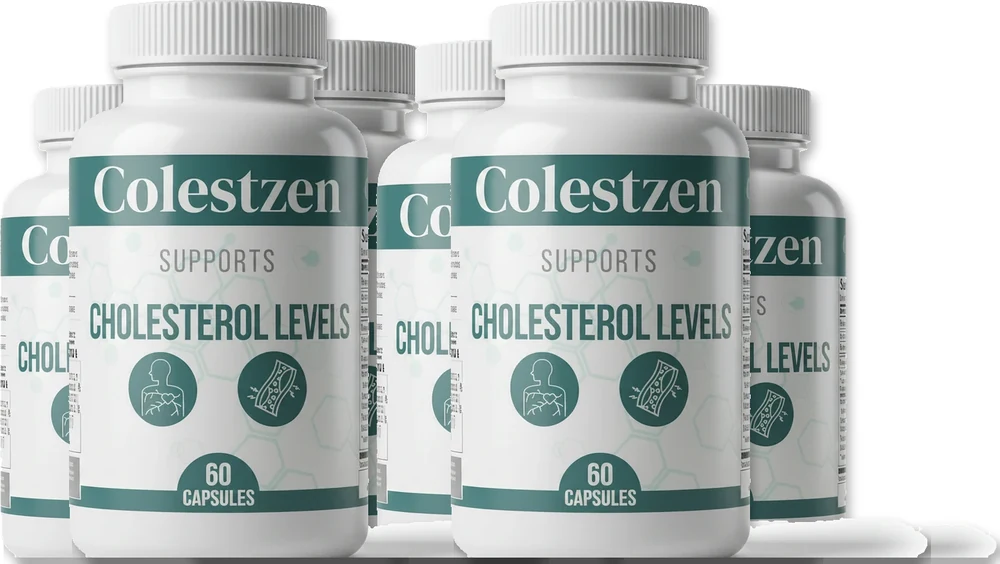
Building a heart-health routine, not just a single pill?
CoQ10 handles cellular energy; a botanical formula tackles the lipid side. If you want to see how a full-label daily heart formula is put together — every ingredient, every amount — it helps to read the whole thing before you commit.
See the Official ColestZen OfferHow much CoQ10 should you take, and in what form?
The working range in human research is remarkably consistent. General-wellness studies cluster at 100 mg per day. Research in people with diagnosed cardiac conditions, run under supervision, has more often used 200 to 300 mg, almost always split into two or three servings. For most people asking what CoQ10 is good for, 100 to 200 mg daily is the sensible starting bracket.
Two practical rules matter more than the exact number. First, take it with food that contains fat: CoQ10 is a large, greasy, water-insoluble molecule, and a big share of a dry dose on an empty stomach simply passes through. Second, be patient. Plasma levels climb over roughly two to three weeks and then plateau, so anything you judge in the first fortnight is mostly expectation, not effect.
On the eternal ubiquinol-versus-ubiquinone question: both raise blood levels, and the body converts between them, so the difference is smaller and less consistent than the price gap implies. What matters more is the delivery system — an oil-based softgel of either form usually beats a dry powder capsule. Ubiquinol is a reasonable hedge if you are older or your budget stretches to it, but it is not a different ingredient with a different evidence base. Our full guide to CoQ10 dose, forms and absorption breaks down how to read a label so you are not paying for milligrams that never reach your bloodstream.
A supplement that is not absorbed is not a low dose — it is no dose. With CoQ10, the delivery system deserves at least as much scrutiny as the number printed on the front of the bottle.
Where the evidence thins, and what CoQ10 cannot do
This is the section most product pages skip, so let us be direct. CoQ10 does not lower cholesterol and should never be sold as if it does. It does not clear arterial plaque. It does not replace blood pressure medication, a statin, or any prescription. The blood-pressure benefit is real but small, and the statin-muscle benefit is genuinely mixed. Claims about skin, athletic performance and general vitality in healthy adults sit on much thinner ground than the confident marketing suggests.
There are practical cautions too. CoQ10 may interact with warfarin and other anticoagulants because of a structural resemblance to vitamin K, so anyone on those medicines needs medical supervision before adding it. Because it can nudge blood pressure, an additive effect with blood-pressure medication is at least theoretically possible. It is not recommended in pregnancy or while nursing without medical advice. And because supplements are not pre-approved for potency, the milligrams on a label are a claim, not a guarantee — a third-party tested product is worth the small premium.
Where CoQ10 fits next to cholesterol support
It helps to see CoQ10 as answering a different question from a cholesterol formula. CoQ10 is about mitochondrial energy and membrane antioxidant capacity. Plant botanicals such as cinnamon, mulberry leaf, banaba and gymnema are studied mainly for how the body handles sugars and fats — the lipid and metabolic side. They are not competitors; they occupy different rungs of the same ladder, and a thoughtful routine can include both, provided you are honest that each contributes something modest.
If your actual goal is the cholesterol number rather than energy, the sensible move is to read across categories rather than fixate on one nutrient. Our overview of which cholesterol-lowering supplements actually work compares the ingredients with real lipid data, and the nine-botanical ColestZen formula is where we lay out one blended approach ingredient by ingredient, with the evidence for each stated plainly rather than implied.
One closing note on expectations. Any single nutrient, CoQ10 included, is a small lever next to the big ones: what you eat most days, how much you move, whether you smoke, your weight, your sleep, and whether prescribed medicine is taken as directed. CoQ10 is worth considering once those are in reasonable shape — as support, not as a shortcut.
Medical note: this article is general information, not medical advice. Speak to a healthcare professional before starting any supplement, especially if you are pregnant, nursing, taking medication such as a statin or an anticoagulant, or managing high cholesterol or blood pressure — and never stop a prescribed medicine on your own.
Frequently asked questions
What is CoQ10 good for?
CoQ10 is best understood as cellular energy support. It helps mitochondria turn food into ATP and acts as a fat-soluble antioxidant, and the human evidence is strongest for a modest systolic blood pressure reduction of roughly 3 to 5 mmHg and for easing statin-associated muscle complaints in some people. It is nutritional support, not a treatment for any disease.
How much CoQ10 should I take daily?
Most general-wellness trials used 100 to 200 mg per day, and cardiac research under supervision has gone to 300 mg, usually split across two meals. CoQ10 is fat soluble, so take it with food that contains some fat. Plasma levels climb over two to three weeks, so give any trial at least a month before you judge it.
Does CoQ10 lower blood pressure?
On average, modestly. Pooled analyses have reported a systolic reduction of around 4.77 mmHg and a smaller diastolic change, which is meaningful at a population level but small for any one person. It is not a substitute for blood pressure medication, and anyone on such medication should speak to their doctor before adding CoQ10.
Should I take CoQ10 with a statin?
It is plausible and low-risk but not proven. Statins lower the body's own CoQ10 by blocking the same pathway, and some trials report modest improvements in muscle ache scores while others find none. CoQ10 is not a reason to change a statin. If muscle symptoms bother you, that is a conversation for your prescriber, and never stop a statin on your own.
Scientific references
Related reading
- CoQ10 for heart health: dose, forms and absorption explained
- CoQ10 and statins: muscle support and what the evidence shows
- The best heart health supplements for 2026, compared
- The best supplements to lower blood pressure naturally
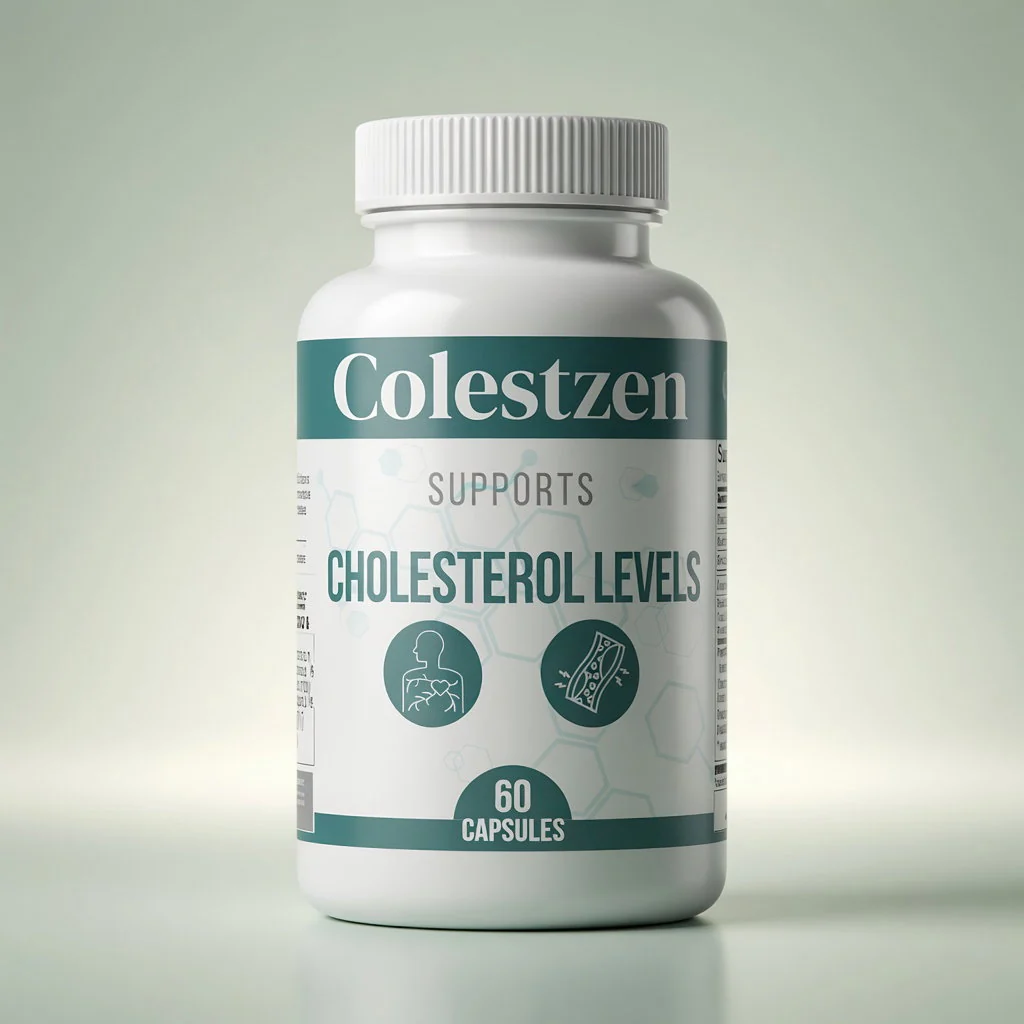
See how ColestZen puts a heart formula together
Nine plant botanicals in one daily capsule, with every ingredient and its amount laid out — a useful reference point whether or not it ends up being your pick.
Check Availability & Offer